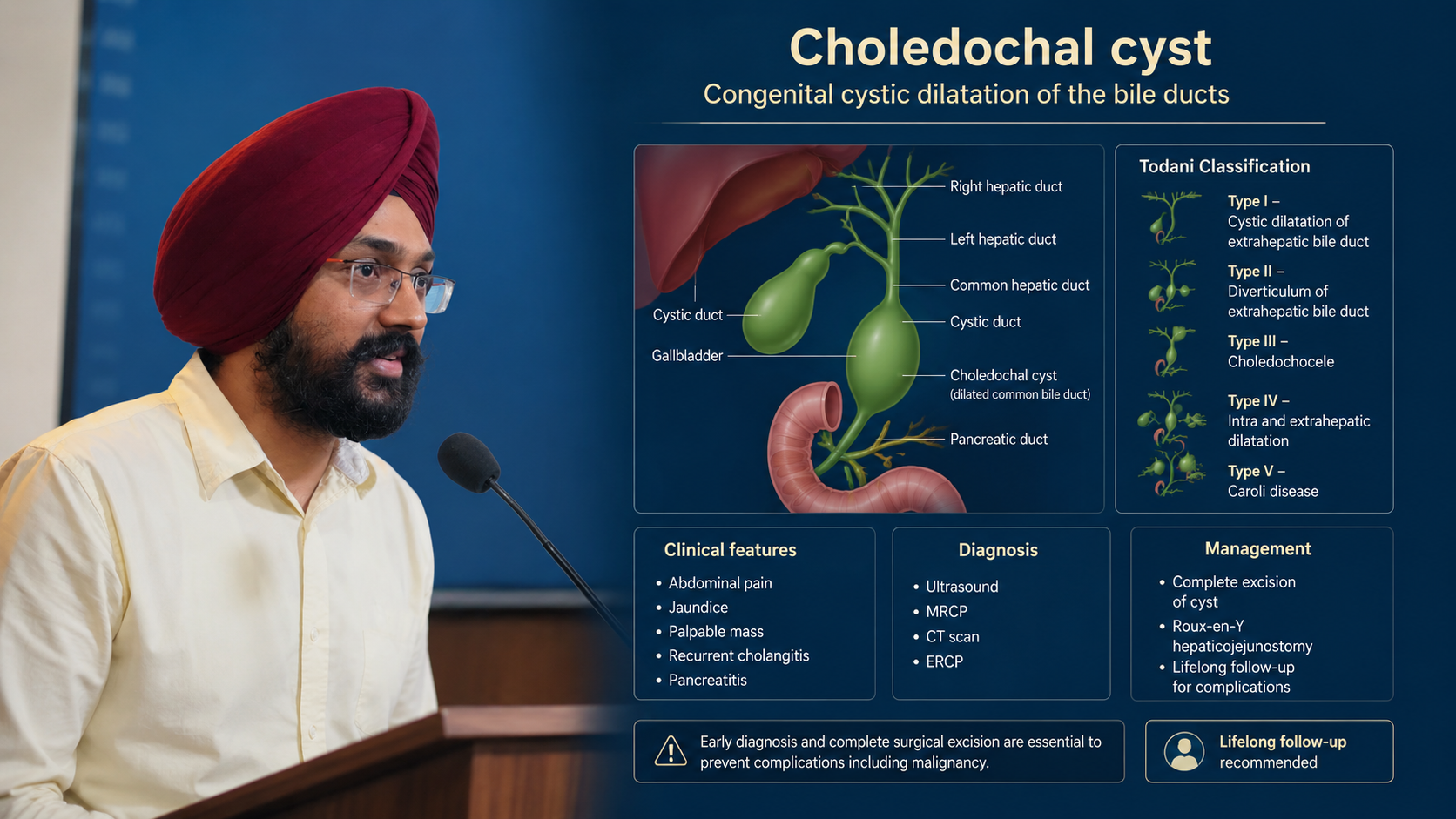
Choledochal Cyst
Choledochal cyst is a congenital (birth-related) condition in which the bile duct becomes abnormally enlarged. It can affect both children and adults and may lead to recurrent infections, pancreatitis, liver damage, and an increased risk of bile duct cancer if left untreated. Choledochal cyst surgery is the definitive treatment and offers excellent long-term outcomes.
06 June 2026
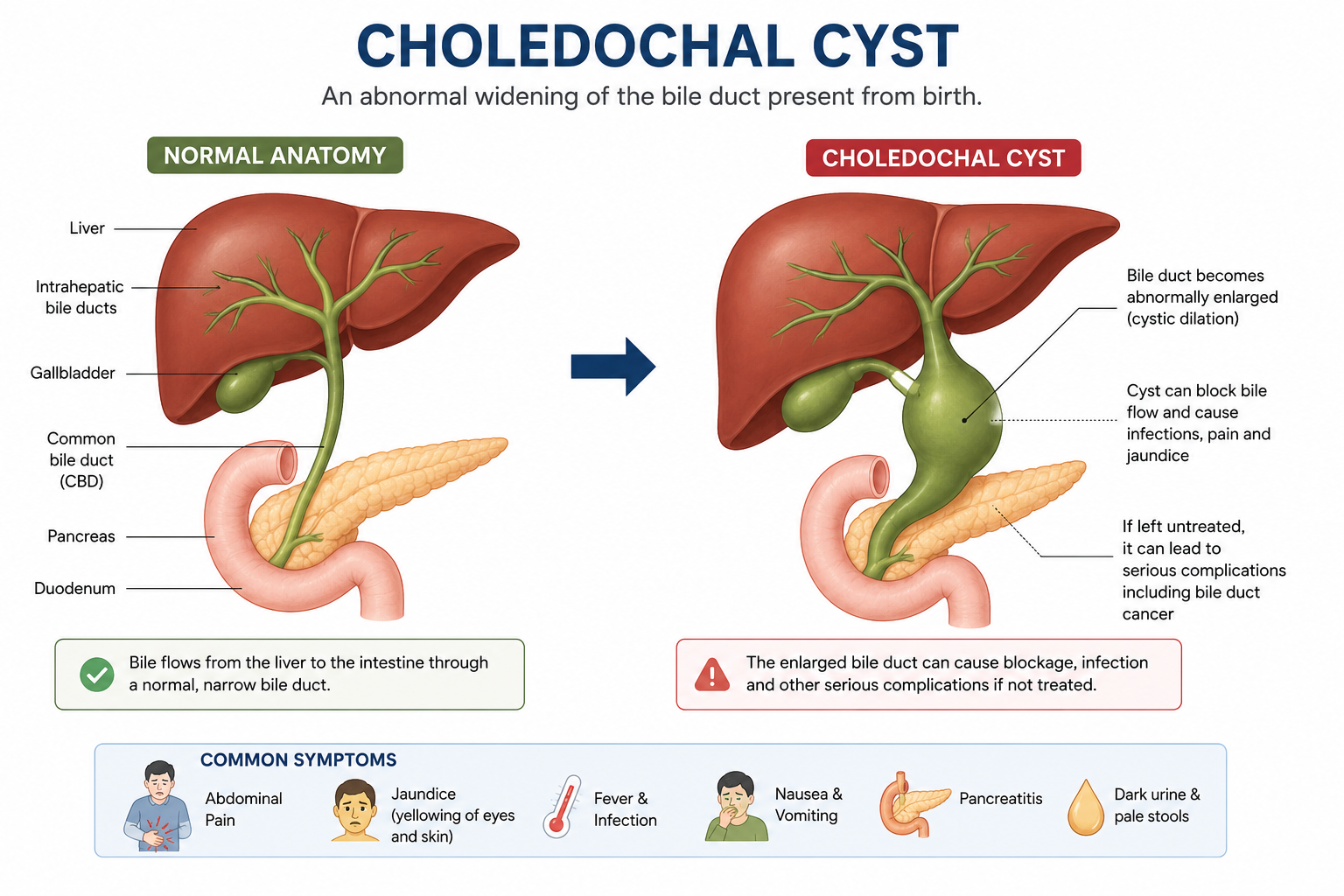
A choledochal cyst is an abnormal dilatation (widening) of the bile ducts that carry bile from the liver to the intestine. Although present from birth, symptoms may develop during infancy, childhood, adolescence, or adulthood. Early diagnosis and timely treatment by a hepatobiliary and liver surgery specialist can help prevent serious complications.
What Causes a Choledochal Cyst? (Etiology)
The exact cause of a choledochal cyst is not fully understood. The most accepted theory involves an abnormal junction between the pancreatic duct and bile duct, known as an anomalous pancreaticobiliary junction (APBJ).
This abnormal connection allows pancreatic enzymes to reflux into the bile duct, causing chronic inflammation and progressive enlargement of the bile duct.
Choledochal cysts are more common in females and are frequently diagnosed in Asian populations.
Symptoms of Choledochal Cyst
Symptoms vary depending on age and the type of cyst.
Common symptoms include:
- Upper abdominal pain
- Jaundice (yellowing of the skin and eyes)
- Fever due to bile duct infection (cholangitis)
- Recurrent pancreatitis
- Nausea and vomiting
- Abdominal swelling or lump
- Dark urine and pale stools
- Poor growth in children
Many adults are diagnosed after investigations for recurrent abdominal pain, jaundice, or pancreatitis.
Diagnosis of Choledochal Cyst
Early and accurate diagnosis is essential for treatment planning.
Investigations commonly include:
- Ultrasound abdomen
- MRI with MRCP (Magnetic Resonance Cholangiopancreatography) – considered the best non-invasive test
- CT Scan
- Liver Function Tests (LFTs)
- Blood tests for infection and liver health
MRCP helps define the anatomy of the bile ducts and guides surgical planning.
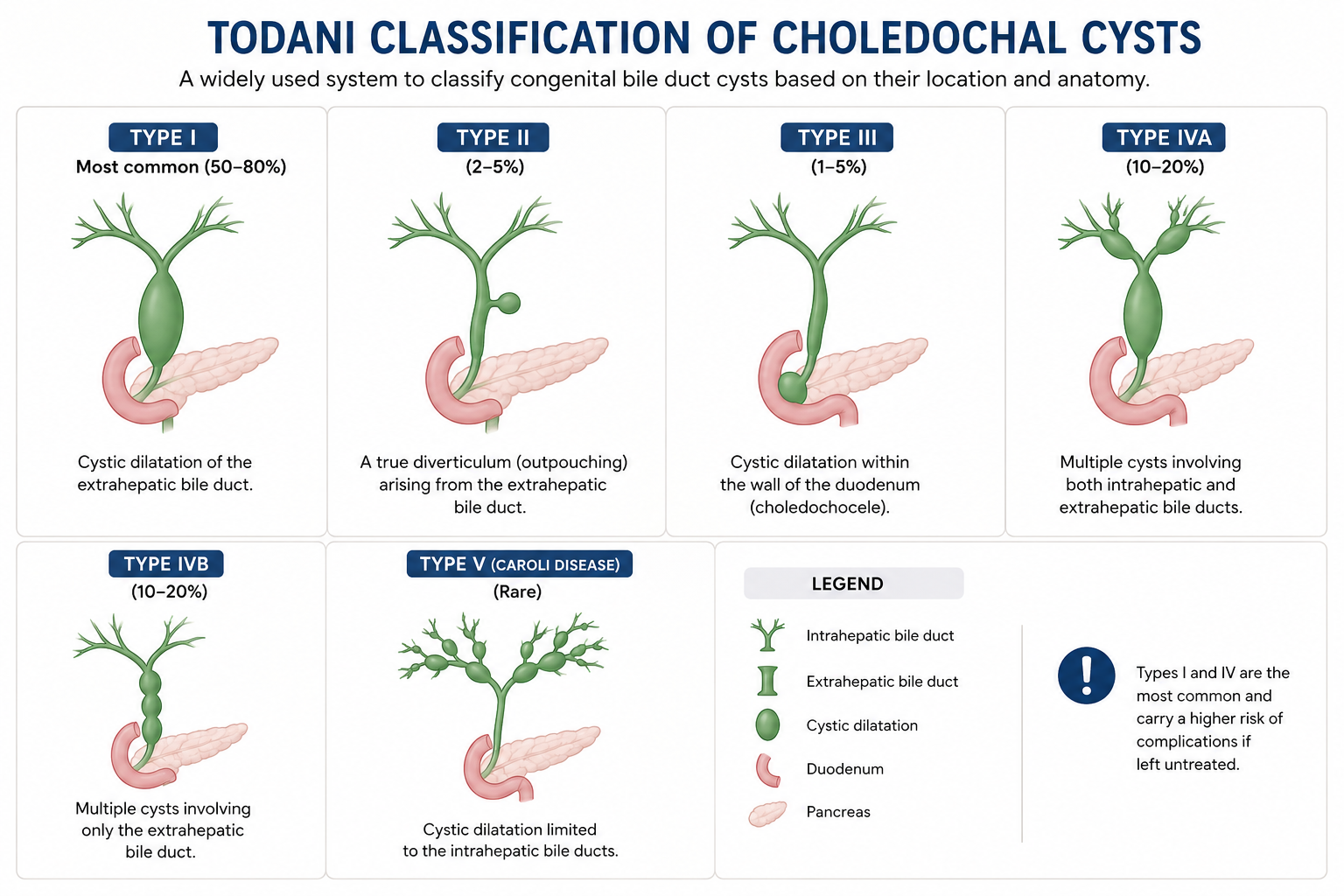
Todani Classification of Choledochal Cysts
The Todani classification helps doctors determine the type of choledochal cyst and choose the most appropriate treatment.
Type I
The most common form, involving dilatation of the extrahepatic bile duct.
Type II
A diverticulum or pouch arising from the bile duct.
Type III (Choledochocele)
A cyst located within the wall of the duodenum.
Type IVA
Multiple cysts involving both intrahepatic and extrahepatic bile ducts.
Type IVB
Multiple cysts involving only extrahepatic bile ducts.
Type V (Caroli Disease)
Dilatation affecting only the intrahepatic bile ducts within the liver.
Why Does a Choledochal Cyst Need Treatment?
Untreated choledochal cysts may lead to:
- Recurrent cholangitis
- Recurrent pancreatitis
- Bile duct stones
- Liver fibrosis and cirrhosis
- Portal hypertension
- Liver abscess
- Cholangiocarcinoma (bile duct cancer)
Studies have shown that the risk of bile duct cancer increases with age, making early surgical treatment of choledochal cysts important even in patients with mild symptoms.
Treatment Options for Choledochal Cyst
Surgery remains the gold-standard treatment.
The goals of treatment are to:
- Remove the abnormal bile duct
- Restore normal bile drainage
- Prevent recurrent infections
- Reduce the risk of pancreatitis
- Eliminate future cancer risk
Medication alone cannot cure a choledochal cyst.
Surgical Treatment of Choledochal Cyst
Complete Cyst Excision with Roux-en-Y Hepaticojejunostomy
This is the standard operation for most Type I and Type IVA choledochal cysts.
The abnormal bile duct is completely removed and bile drainage is restored by connecting the healthy hepatic duct to the intestine. This procedure provides excellent long-term outcomes and significantly reduces the risk of future complications.
Type II Cyst Excision
The cyst is removed while preserving the normal bile duct.
Treatment of Type III (Choledochocele)
Depending on the size and symptoms, treatment may involve endoscopic or surgical intervention.
Liver Resection
In selected patients with localized intrahepatic disease, removal of the affected part of the liver may be recommended.
Liver Transplantation
Rarely, liver transplantation may be required in patients with advanced liver disease, secondary biliary cirrhosis, or severe Caroli disease.
Prognosis After Choledochal Cyst Surgery
The long-term outlook after complete choledochal cyst excision is excellent. Most patients return to normal daily activities and experience significant improvement in symptoms.
Regular follow-up helps monitor liver function and bile duct health.